
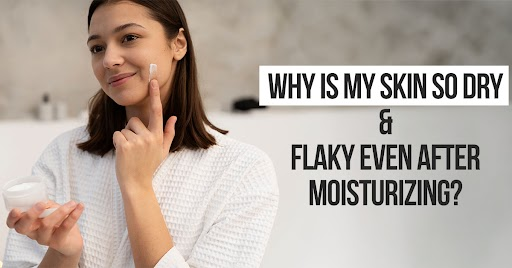
The recursive cycle of persistent dryness often creates a pattern of inflammation and failed cellular repair that leaves many individuals feeling hopeless about their skin health. You apply a thick layer of expensive cream, wait twenty minutes, and find your skin feels like parchment again by noon. This persistent dehydration suggests that your routine is lacking something fundamental or your barrier is fundamentally compromised. Finding the Best Skin Clinic in Chennai is often the necessary first step for those who cannot solve this through over the counter products alone. If you are constantly asking why my skin is so dry and flaky, you need to look beyond the surface level. It is rarely about the volume of product you use. It is almost always about the chemistry of the skin barrier and how it interacts with your environment.
The Science of a Leaky Barrier
The outermost layer of your skin, the stratum corneum, acts as a seal. When this seal is healthy, it keeps moisture in and irritants out. Think of it as a brick wall where your skin cells are the bricks and lipids are the mortar. If the mortar is washed away by harsh soaps or depleted by age, the bricks lose their cohesion. Water escapes through a process called transepidermal water loss. You cannot fix a leaky bucket by just pouring more water into it. You have to patch the holes first.
Learning how to treat cracked skin on the face involves identifying if your lipid levels are depleted or if you have caused micro-tears through aggressive scrubbing. Many people assume that if their skin is flaking, they need to exfoliate more. This is a mistake. Scrubbing at an already compromised barrier is like sandpapering a wound. It triggers more inflammation, which leads to more flaking. The skin starts to feel tight, especially after washing. This is the first sign that your barrier is failing to hold onto its natural moisturizing factors.
Why Your Moisturizer Might Actually Be Failing You
The efficacy of a topical hydrator depends entirely on its molecular formulation and its ability to integrate with the skin’s existing lipid matrix. Most people gravitate toward humectants like hyaluronic acid or glycerin. These ingredients are excellent because they draw moisture into the skin. However, there is a catch. If you live in a dry environment or work in a heavily air-conditioned office, there is no moisture in the air for the humectant to grab. It starts pulling water from the deeper layers of your own skin instead. Without an occlusive layer to seal that water in, it simply evaporates. This is a primary reason why my skin is so dry and flaky even after a multi-step routine.
You need a balance of three things:
- Humectants to draw water in.
- Emollients to smooth the surface and fill gaps between cells.
- Occlusives form a physical barrier against evaporation.
If your cream is too light, it lacks the occlusives. If it is too heavy and greasy, it might lack the humectants needed to actually hydrate the cells. Finding that balance is difficult without professional guidance.
Environmental Triggers and Lifestyle Factors
Chennai’s climate presents a unique challenge. While the humidity is generally high, the constant transition between the outdoor heat and the dry, filtered air of indoor cooling systems wreaks havoc on skin stability. The skin is constantly trying to recalibrate its moisture levels. Hard water is another silent culprit. The minerals in hard water react with the fatty acids in your cleansers to form a film that is incredibly difficult to rinse off. This film disrupts the pH of your skin and strips away natural oils.
Diet and systemic health also play a role. If you are not consuming enough healthy fats, your body cannot produce the sebum necessary to coat the skin. We often find that the best treatment for dry and flaky skin involves a combination of topical repair and internal support. It is not just about what you put on your face, but how you are supporting the organ from within.
When It Is More Than Just Dryness
Sometimes, the flaking is not just a lack of oil. It could be a medical condition masquerading as dryness. Seborrheic dermatitis, for instance, involves flaking caused by an overgrowth of yeast on the skin. Applying heavy oils to this condition can actually make it worse. Eczema and psoriasis also require very different approaches than simple dry skin. If you have been searching for how to treat cracked skin on the face and nothing seems to work, there is a high probability that an underlying inflammatory condition is at play.
Chronic flaking that is accompanied by redness or itching is a signal from your immune system. If you are asking why my skin is so dry and flaky, consider if the flakes are yellow or white, if they appear in the eyebrows or around the nose, or if the skin feels hot to the touch. These details change the diagnosis entirely. A standard moisturizer will never cure a fungal or autoimmune issue.
Practical Steps for Skin Rehabilitation
Before you go out and buy another “miracle” cream, try simplifying. The goal is to let the skin rest and recover its natural function.
- Stop using hot water immediately. Lukewarm water is the maximum temperature your face should encounter. Hot water dissolves the very lipids that keep your skin soft.
- Apply your moisturizer while your skin is still damp. This traps the surface water and prevents it from evaporating.
- Audit your cleanser. If it foams excessively, it likely contains sulfates that are too harsh for a compromised barrier. Switch to a non-foaming, creamy cleanser.
- Take a break from active ingredients. Retinol, Vitamin C, and AHAs are great for anti-aging, but they are irritants. If your skin is currently flaking, these ingredients will only deepen the damage.
- Check for fragrance. Many products use synthetic scents that cause contact dermatitis in dry skin.
Often, the best treatment for dry and flaky skin is a “moisture fast,” where you use only a basic ceramide-rich cream and a gentle cleanser for two weeks. This allows the stratum corneum to knit back together without interference from complex chemicals.
The Value of Professional Diagnosis
Relying on anecdotal evidence or viral skincare trends without a clinical foundation often leads to long term damage that requires extensive professional intervention to reverse. You can spend thousands of rupees on various lotions and still end up with a red, peeling face. A clinical assessment allows for a precise look at your skin’s moisture levels and oil production. We use specialized tools to see if your barrier is truly broken or if you are simply using the wrong products for your skin type.Clinical intervention at Akshaya Skin Clinic moves beyond the superficial application of over the counter creams that often fail to penetrate the stratum corneum effectively. We observe that patients frequently arrive with chemical burns or heightened sensitivity because they attempted to self-treat complex barrier issues with aggressive activities. Consulting a Dermatologist in Sholinganallur provides access to diagnostic tools that measure hydration levels and sebum production with scientific accuracy. Often, the best treatment for dry and flaky skin is a medically supervised regimen that prioritizes physiological repair over aesthetic convenience. This shift from retail experimentation to evidence-based dermatology is what ultimately resolves chronic flaking and teaches patients how to treat cracked skin on the face without causing further inflammatory damage.